

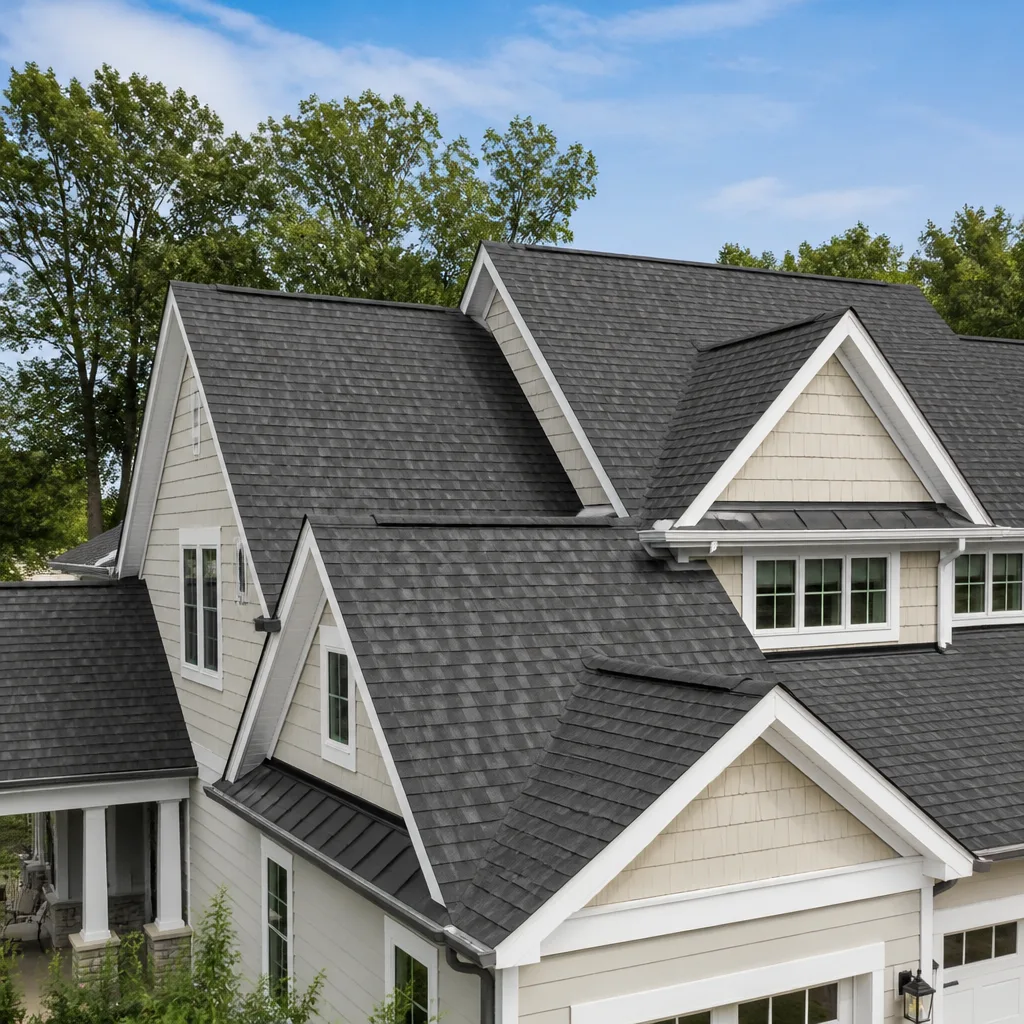
 Roofing
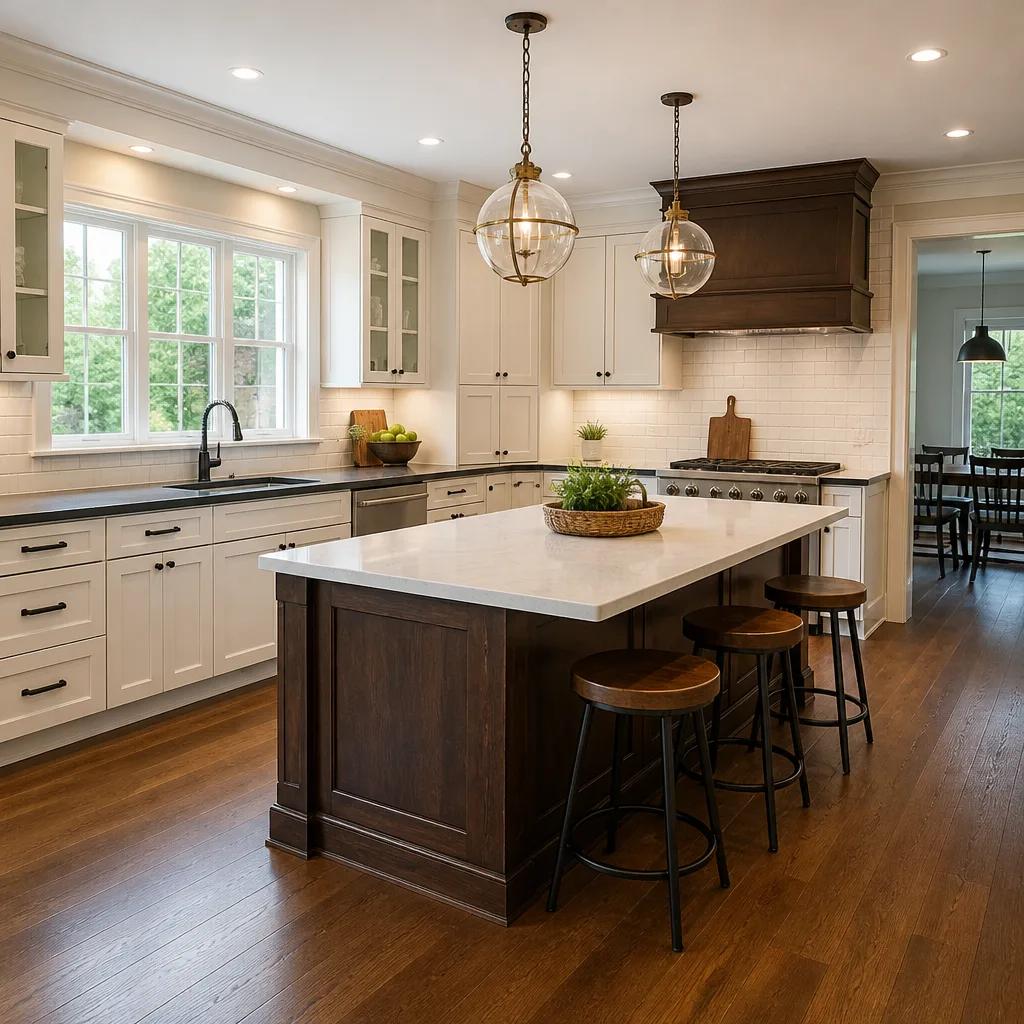 Kitchen remodeling
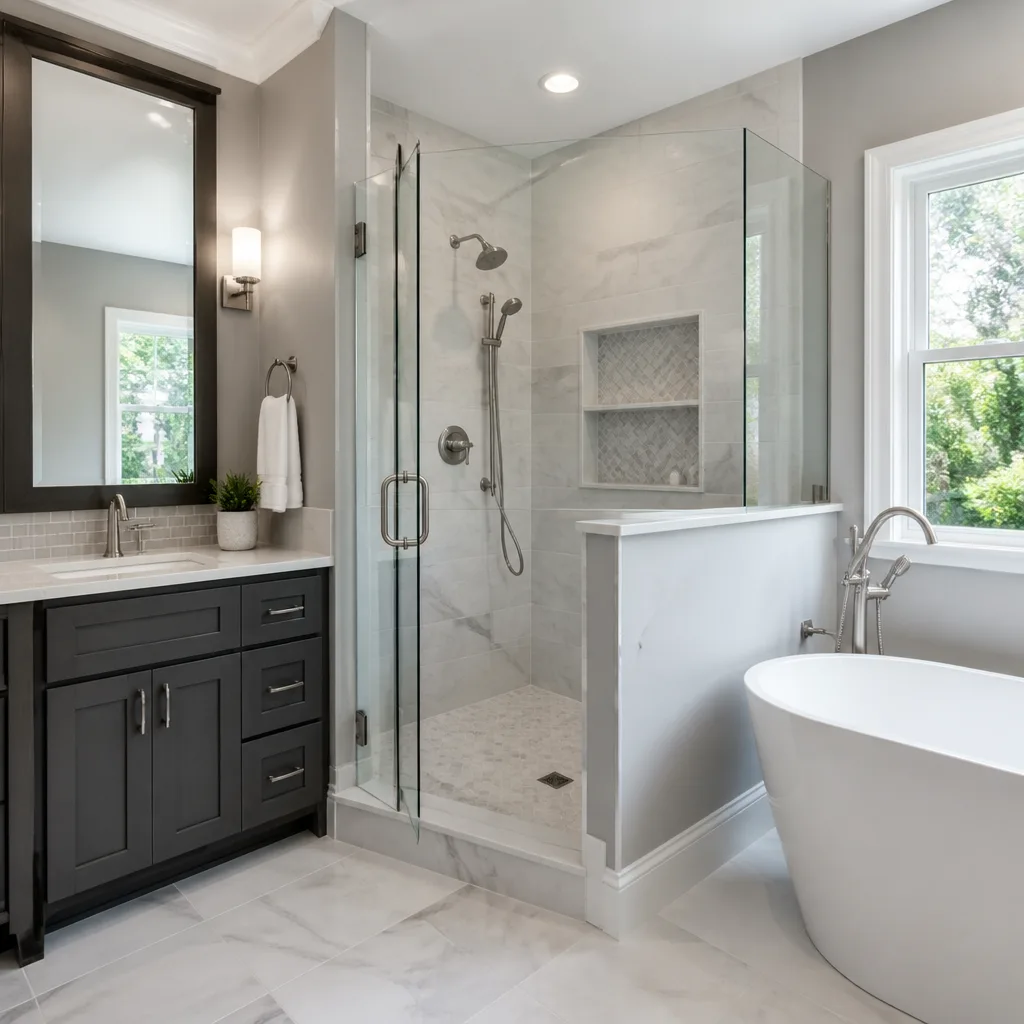 Bathroom remodeling
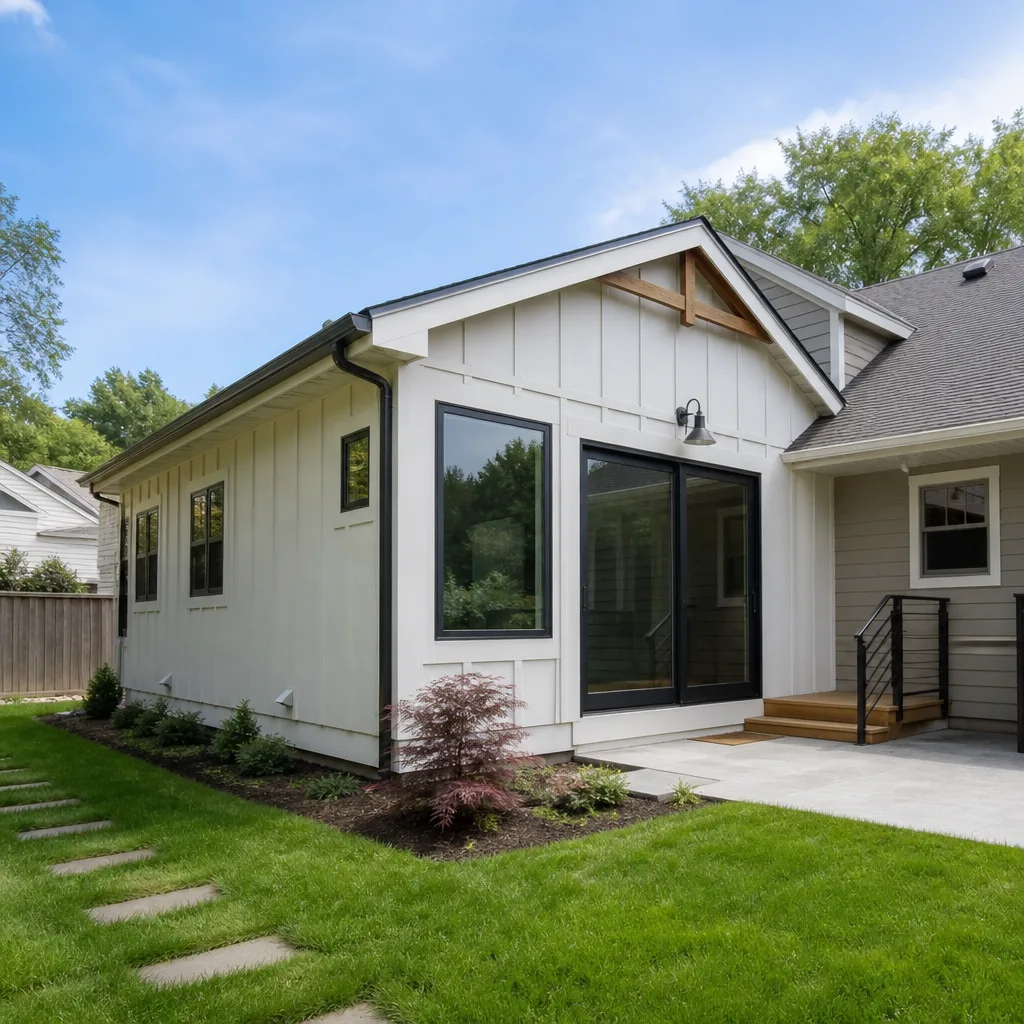 Home additions & ADU
 Windows & doors
 Driveway & pavers
 Fence
Free written scope consultation - allowances, timeline, and change-order rules on paper before a single trade is scheduled
James Hardie Roofing: The The Hammocks Owner’s Guide
James Hardie roofing in The Hammocks means fiber cement or HardiePlank-topped roof assemblies, and the part that fails most often is the roof-to-wall and panel-joint detail, not the panel field itself. Most owners here discover it after water shows up at a ceiling near a wall line or a second-story soffit starts to soften. When we quote that failure, repairs typically land $400 to $1,800 and a full James Hardie roof replacement runs $8,000 to $20,000 installed. We install and restore James Hardie-spec roofing as an independent contractor; we aren’t affiliated with James Hardie. Our technicians have up to 12 years of experience with fiber cement assemblies.
What most people see first: a rust streak down the fascia after a wet July, a popped joint at the eave, or mold on a closet ceiling directly below a laminated panel. In The Hammocks, the version of this we see weekly is a HardiePlank fascia board swelling at the lap joint where the underlayment was run short at install. Once water is inside that seam, the trim pulls and the panel above it begins to telegraph.
Key Takeaways
- Failed James Hardie roof detailing is almost always a joint, flashing or fastener issue, not a fiber cement panel defect.
- Repairs start at $400; roof replacements start at $8,000. We never quote a repair on a roof that needs a replacement.
- We source James Hardie-compatible components from legitimate roofing suppliers – never from a truck or a “we have it in stock” claim.
- Every install is backed by the 730-Day Done Right Promise, and our pricing is upfront: the number we quote is the number you pay.
Which James Hardie Models This Applies To
James Hardie fiber cement roofing and siding systems show up in The Hammocks under a handful of product families: HardiePlank, HardiePanel, HardieShingle, HardieTrim and HardieSoffit. If your home has a James Hardie roof-level detail, the part you need will be one of: the lap siding panel, the trim board, the soffit panel, the fastener-transition detail, or the flashing boot at a pipe penetration. Identifying the right part means reading the back stamp or edge label on the panel. Hardie labels panels with the product name, thickness and finish code, usually on the back of the factory edge. If the label is gone, measure the exposure (the visible height per course) and the thickness; 5/16 inch panels are the standard for soffit, and 1/4 inch or 5/16 inch variations exist in trim stock.
OEM James Hardie material is the safest match for anything with a factory-baked finish, because faded trim or a mismatched color line is instantly visible against an existing wall. We use true James Hardie replacement parts for color-critical areas and quality fiber cement equivalents for hidden soffit and structural trim where finish doesn’t matter. That’s a cost call we make openly with you before we quote, not after.
Styles & brands we work with
- Kitchen remodeling
- Bathroom remodeling
- Home additions & ADU
- Roofing
- Windows & doors
- Driveway & pavers
- Fence
Signs Your James Hardie Roofing Is Failing
Fiber cement is a strong material; what fails is the system around it. Here’s what to look for on a James Hardie roof or HardiePlank-topped home in The Hammocks:
- Rust streaks on the fascia or trim. The fastener heads are breaking their paint seal and wicking South Florida rain into the joint. Usually a re-drive and re-seal, not a panel swap.
- Swollen or soft trim at the lap joint. The underlayment is short at that seam and water is sitting on raw fiber cement fiberboard trim. This is the #1 failure we see on The Hammocks homes dated 2010 to 2016.
- Caulk failure along a vertical panel joint. UV here degrades exterior caulk in 3 to 5 years, and once the bead opens, the panel edge starts to drink. Easy to catch early, expensive if ignored.
- Mold or discoloration on a ceiling below the roofline. Water is getting in at a flashing boot or a valley terminator and traveling along the panel back. This is your priority inspection.
- Visible panel paint chalking or fading in one isolated area. Sun exposure alone shouldn’t do that; a single faded panel usually signals a replacement panel from a different finish batch.
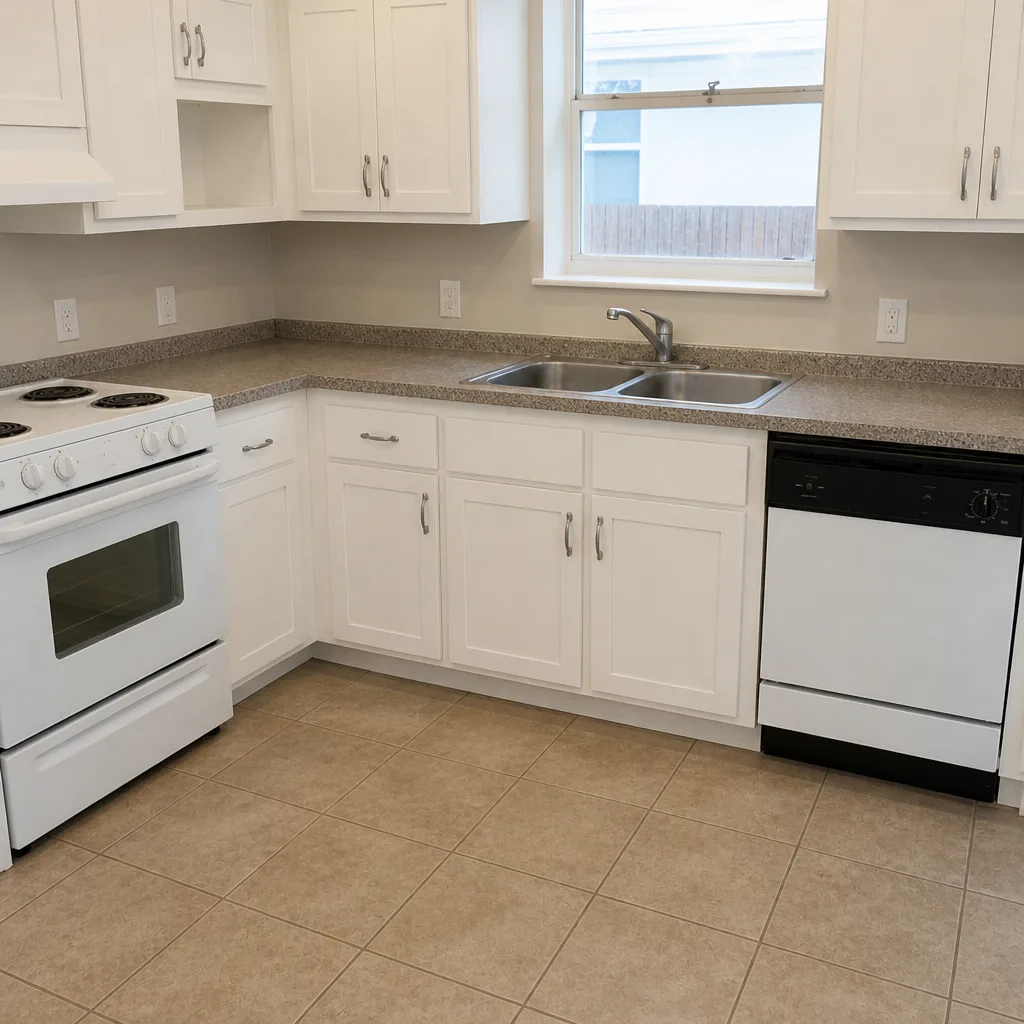
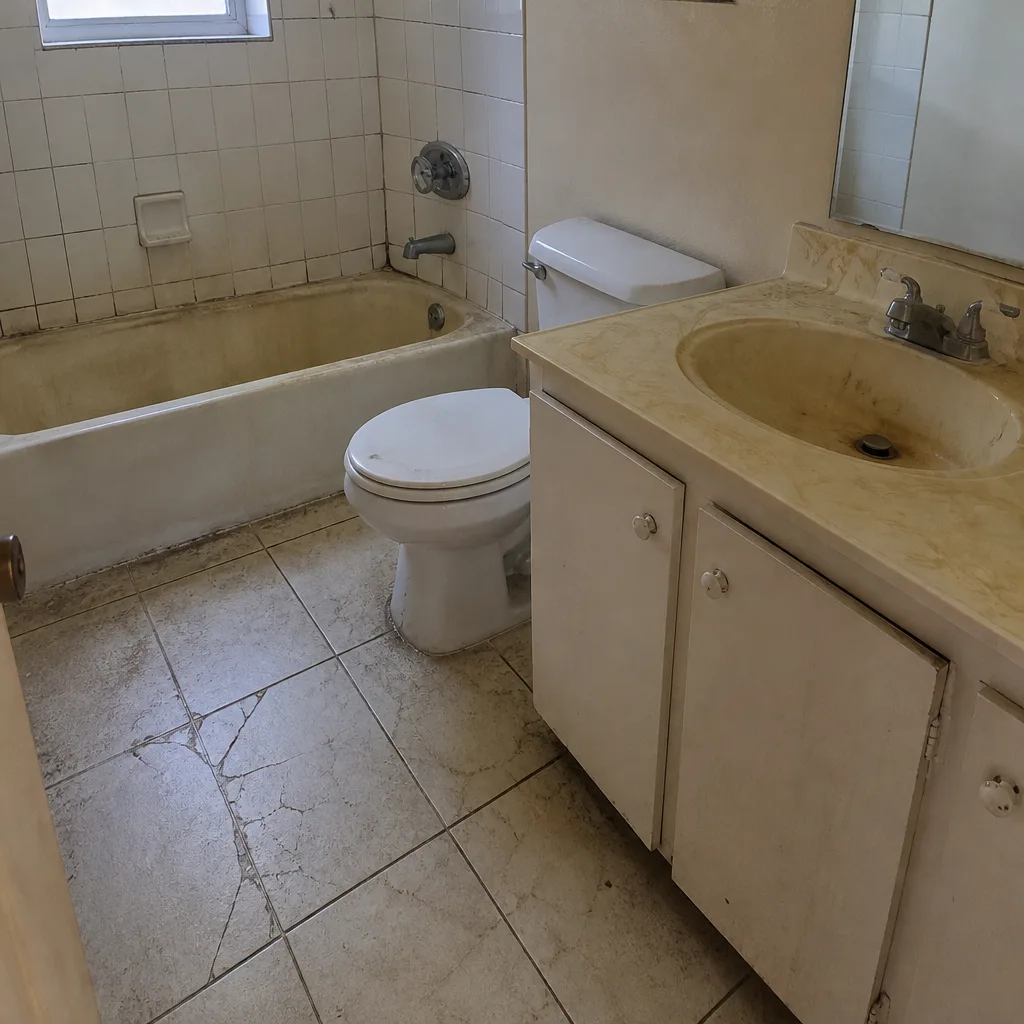
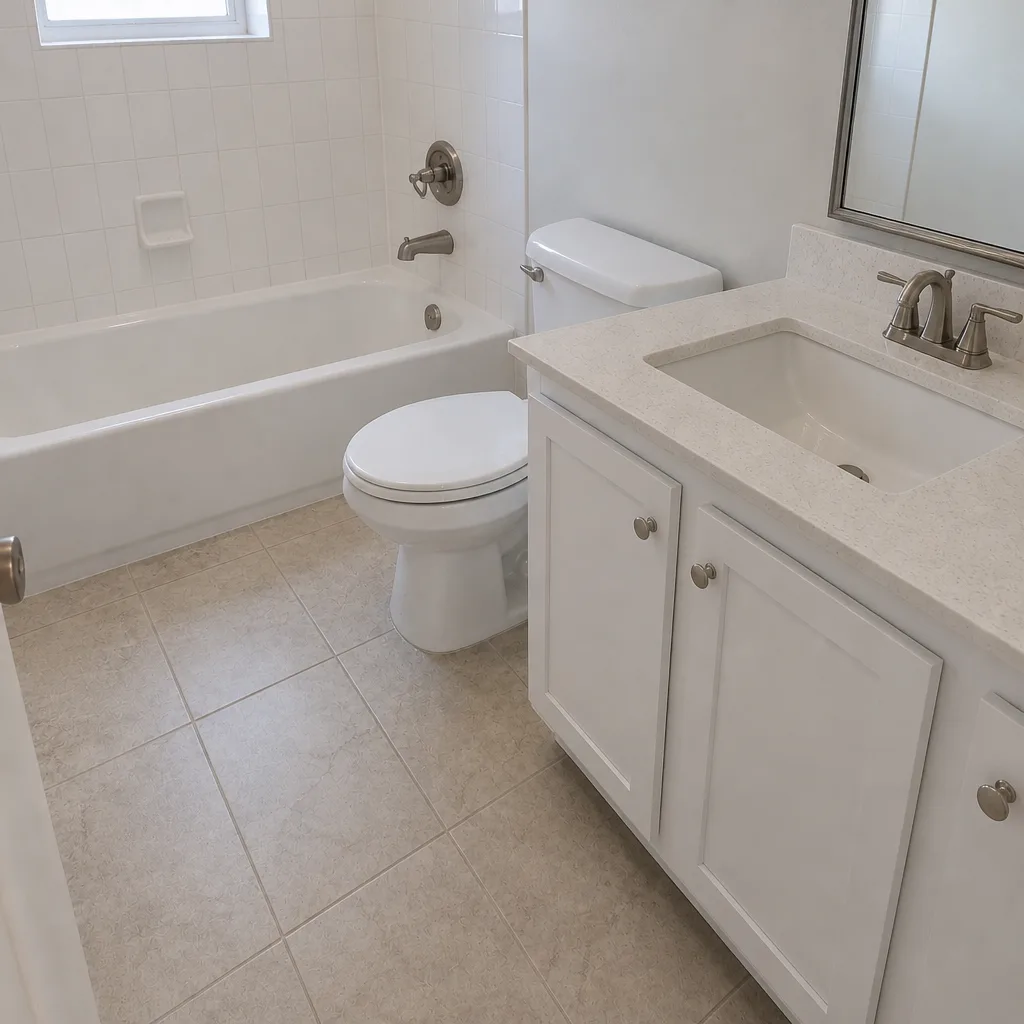
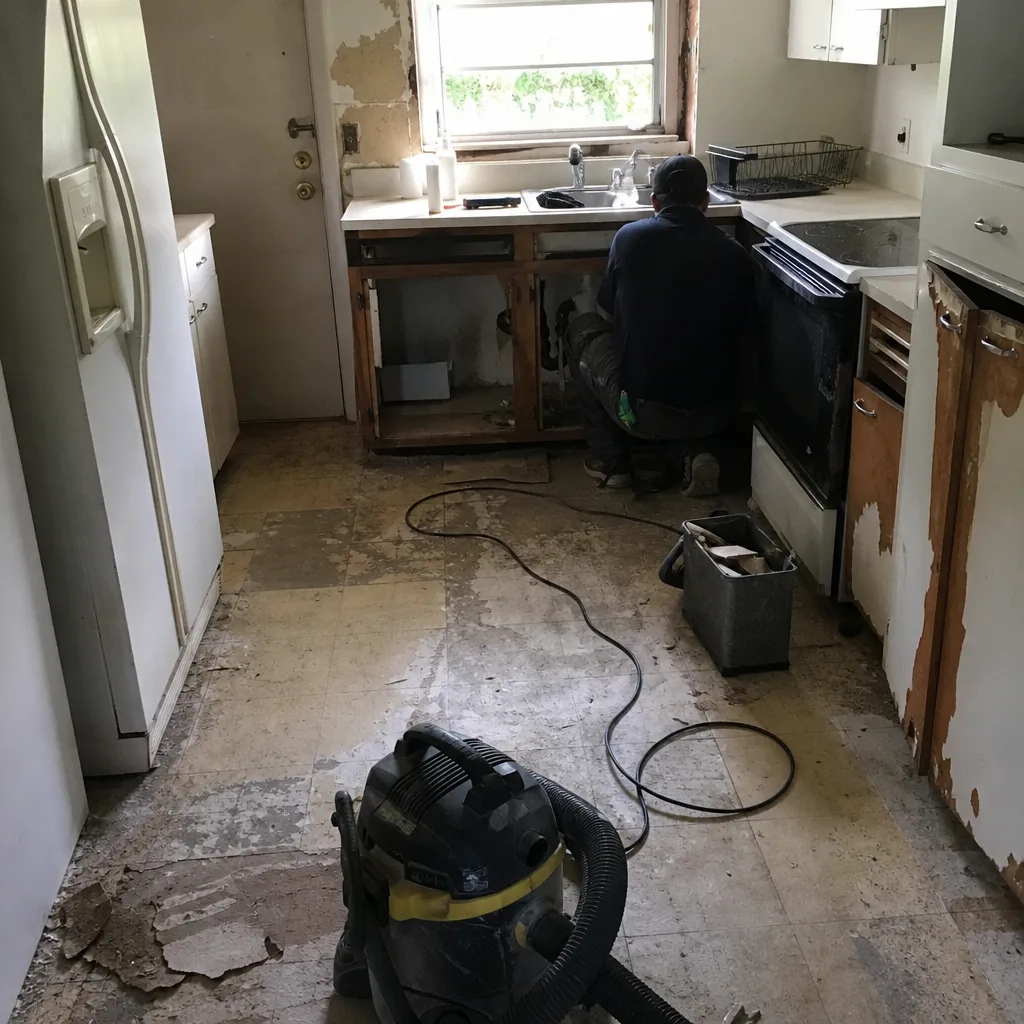
See the difference
 Before
 After
 Before
 After
 Before
 After
Replacement Cost & What’s Included
For The Hammocks, the honest ranges are: roof repair $400 to $1,800, tile roof repair (on mixed systems) $600 to $2,500, and roof replacement $8,000 to $20,000 installed. On a James Hardie roof detail, the middle-of-the-road failure usually lands near $1,100 to $1,400 because it covers the panel, the trim board, the flashing, the fasteners and the re-caulk at the joint.
What drives the range:
- Number of panels or trim boards involved
- Whether we can match the finish color exactly or need to feather-blend
- Roof height, pitch and whether the failed area is reachable without tear-off
- Whether the underlayment at that seam is also compromised
Our quote is a written line-item: part number, labor, disposal, and finish code. The number you see is the number you pay. Every install is covered by the 730-Day Done Right Promise – if it’s not done right, we make it right. Permits are pulled where The Hammocks requires them, and we walk away only after the inspection passes. We also handle KraftMaid, Cambria and Silestone brand work elsewhere in the home, so if your roof repair turns into adjacent finish work, you have one contractor instead of three.
DIY or Call Us?
An owner can safely inspect a fiber cement roof detail from the ground with binoculars: look for rust streaks, popped caulk lines, and soft fascia at the eave. That’s it. Every other step – walking the roof, unscrewing panels, prying a trim board, resealing a penetrated flashing boot – is where it goes wrong.
Two reasons, and we’re direct about them. First, a James Hardie panel is heavy (a 5/16 inch fiber cement panel can run 18 to 22 pounds for a standard run) and hard to control on a pitch; the injury risk is real. Second, the failure you can see is rarely the failure that’s causing it – we’ve opened seams on The Hammocks homes where the visible swelling was 3 feet downwind of the actual leak source, and a DIY repair at the visible spot leaves the real leak untouched.
If you’re within warranty or just unsure, call us. A free estimate costs you nothing and gives you a written number to compare. Call (844) 761-9356 – a live person answers 24/7, no voicemail.
FAQs
A properly installed James Hardie fiber cement roof system carries a manufacturer warranty in the 30-year range for the panel itself, but the sealants and fasteners fail long before that in The Hammocks climate. Expect to inspect caulk and fastener heads every 3 to 5 years and plan for a mid-life touch-up at year 8 to 12. The panel is not the problem; the joint is. Call (844) 761-9356 for an exact quote – estimates are free.
Yes, in most cases – a James Hardie panel or trim failure is repairable if the panel field is sound and the leak is contained to a joint, flashing or fastener. If water has traveled along a structural panel back or reached sheathing for more than one season, replacement is usually the cheaper honest call. We’ll tell you which in a free estimate, and we’ll show you the failure on the roof, not just in the report. Call (844) 761-9356 to schedule it.
A single-panel or trim-board swap is typically a one-day job for our crew, including finish caulk and paint matching. Larger repairs that require temporary flashing, underlayment replacement and new ColorPlus finish matching run 2 to 3 days. We don’t predict same-day completion on a multi-panel repair, and we don’t promise it. Most jobs completed in a single visit when the scope stays under one panel, and we tell you which category you’re in before we start. Call (844) 761-9356.
We source James Hardie-compatible material from legitimate roofing and fiber cement suppliers, matched to your finish code and panel thickness. We don’t carry parts on a truck and we don’t claim “in stock” until the supplier confirms. If your home needs a discontinued HardieTrim or HardieSoffit profile, we tell you upfront and quote the closest current equivalent – with the color difference called out, not hidden. Call (844) 761-9356 for a free estimate.
If you’re standing on a ladder right now, get down and call. If you’re on your couch across The Hammocks and just noticed a rust streak, call before the next rain: our phone is answered by a live person 24/7, and a free estimate is the cheapest step in this whole process. Call (844) 761-9356 to schedule your free estimate.
Written by the team at Groundwork Construction Co. of The Hammocks, serving The Hammocks and nearby areas.