
Last updated November 17, 2026
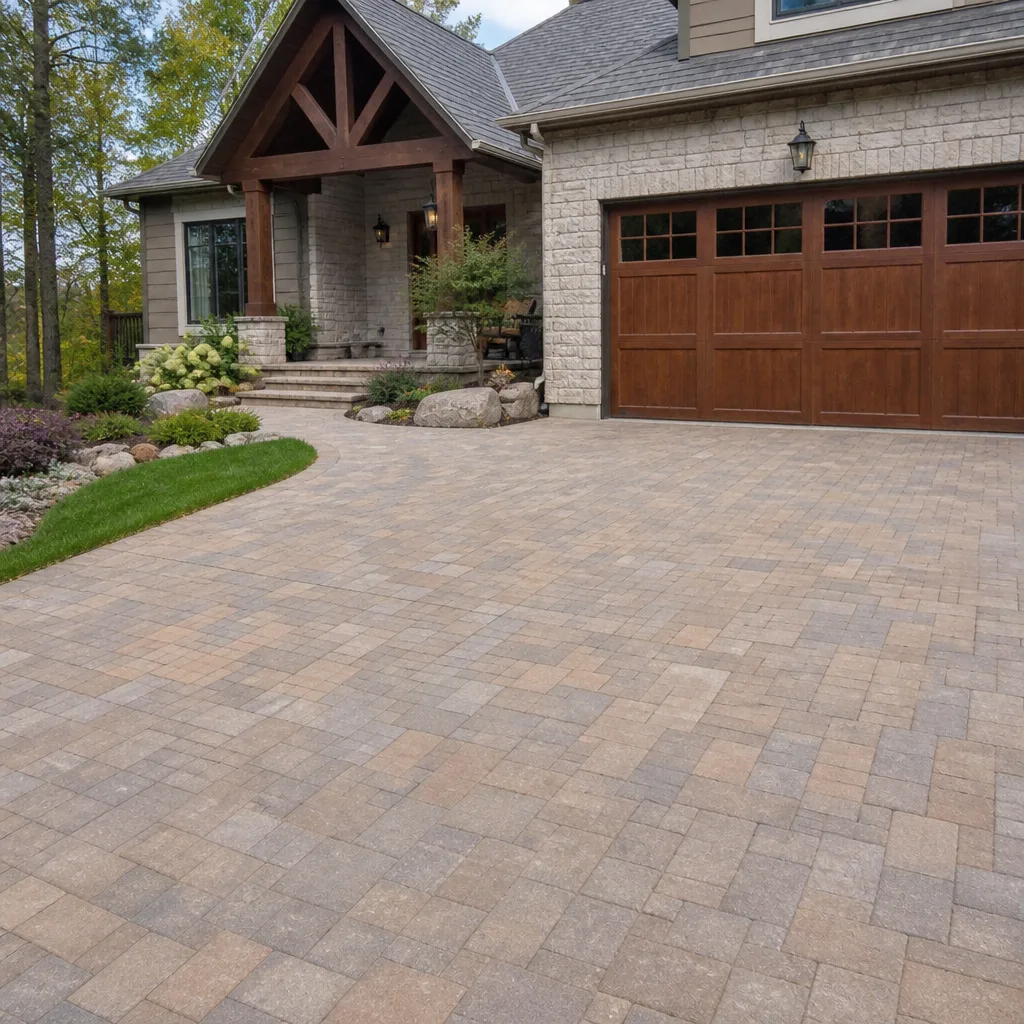 Driveway & pavers
 Kitchen remodeling
 Bathroom remodeling
 Home additions & ADU
 Roofing
 Windows & doors
 Fence
Free written scope consultation - allowances, timeline, and change-order rules on paper before a single trade is scheduled
DIY vs Professional Driveway & Pavers: What’s Safe to Do Yourself
Plenty of homeowners have successfully laid beautiful paver driveways. Almost none of them successfully engineered the 6 inches underneath it. That gap is where the DIY versus professional decision actually lives, and it has very little to do with whether you can set a paver straight. In this guide we’ll separate the parts of a paver driveway a motivated homeowner can genuinely own from the parts that quietly fail two or three years later, look honestly at what renting base-prep equipment really costs, and explain why The Hammocks soil and drainage conditions make this harder than the national guides admit. You’ll also see what permits and HOA approval actually require here, and how to structure a hybrid project where you do the safe work and a professional handles the foundation.
Quick Answer
Finishing work is safe to DIY; foundation work is not. Designing your paver pattern, choosing materials, doing joint-sand maintenance, and handling minor repairs are all reasonable homeowner jobs. Excavation, base compaction, and drainage grading are not, because a failed base in South Florida’s sandy, high-water-table soil typically costs $4,000 to $9,000 to tear out and rebuild, which is often more than you saved. Permits and HOA approval apply either way.
Styles & brands we work with
- Kitchen remodeling
- Bathroom remodeling
- Home additions & ADU
- Roofing
- Windows & doors
- Driveway & pavers
- Fence
Table of Contents
- The Honest Skills and Equipment Audit
- What You Can Safely Do Yourself
- Why The Hammocks Soil Makes the Base Harder
- What a Failed Base Actually Costs to Fix
- Permits and HOA Approval in The Hammocks
- How to Structure a Hybrid Project
- Questions to Ask a Contractor Before Signing
- Common Mistakes to Avoid
The Honest Skills and Equipment Audit
Before you decide anything, take a hard look at what the base phase actually requires. This is the part of the project that national DIY guides photograph least and describe fastest. Base preparation on a standard two-car driveway needs excavation to roughly 6 to 9 inches of depth depending on the finished paver thickness, a graded subgrade with the correct slope away from the structure, and layered compaction of crushed aggregate in lifts of about 2 to 4 inches. Each lift gets compacted before the next goes down. That’s not a weekend of hand tools.
Here’s what the equipment side looks like:
- Plate compactor: a rental runs roughly $70 to $110 per day, and you’ll need it for several days across multiple lifts. Small walk-behind units struggle to reach proper density on deep base.
- Laser level or rotary transit: $40 to $90 per day to rent. Getting slope right without one is guesswork, and slope is what keeps water moving away from your slab.
- Excavation: a mini-excavator rents for $250 to $450 per day plus delivery and fuel, and operating it competently on a residential lot with irrigation lines, utility runs, and a foundation nearby takes practice. Hand-digging 6 inches of compacted soil across a 400-square-foot driveway is measured in tons, not hours.
- Hand tools and consumables: landscape fabric, edge restraints, screed rails, and a rubber mallet add several hundred dollars on their own.
Tally that honestly and a typical homeowner spends $800 to $1,600 renting equipment they don’t know how to run, on top of two to three weekends of physical labor, to do a job a professional crew completes in far less time with the right machinery and the judgment that comes from repetition. In our experience the equipment math alone rarely favors DIY on a full driveway. Where it does favor DIY is the finishing phase, which we’ll get to.
What You Can Safely Do Yourself
Let’s be clear: there’s real work here a homeowner can own without hurting the outcome. The trick is knowing where the line sits. None of these tasks void future professional work as long as you don’t excavate or alter the base.
- Design the pattern and layout. Walk the space, decide between herringbone, running bond, or a large-format layout, and mark out the footprint with stakes and string. This is where homeowner taste matters most and where no contractor can guess better than you.
- Choose the pavers and the color. Belgard and similar brands offer dozens of options, so take your time with samples in your actual light. Material choice is a homeowner decision, not a technical one, and the right selection can save meaningful money compared to a premium paver you didn’t need.
- Plan the use cases. Figure out where the garbage bins go, where the car actually parks, and whether you want a walkway tie-in. Contractors appreciate a clear brief, and you’ll get a better bid with a finished layout in hand.
- Joint sand maintenance. Every two to three years, paver joints need topping up as sand washes out. This is a homeowner job on a Saturday with a bag of polymeric sand and a push broom.
- Minor repairs and resetting. A single shifted paver or a small settling spot can be lifted, the bedding corrected, and reset. Stay local and light, and don’t disturb the compacted base beneath.
- Weeding the joints. It’s tedious, it’s safe, and it’s yours if you want it.
Those tasks are the safe zone. Everything above the base, in other words, is where a motivated homeowner earns their savings.
Why The Hammocks Soil Makes the Base Harder
Most DIY paver guides are written for a climate where the ground freezes and thaws, the soil is a stable clay or gravel mix, and the water table sits well below the surface. The Hammocks doesn’t fit any of that, and the base phase gets significantly harder as a result.
The dominant soil in The Hammocks is sandy and drains fast near the surface but sits over a high water table that rises during the June to October rainy season. A base prepared for the dry season can behave very differently in August. What that means in practice:
- Washout risk. Sandy subgrade with no geotextile fabric will migrate into the aggregate base under load, and once it does, the base loses density and pavers start to settle unevenly.
- Drainage engineering matters more than depth. National guides focus on base thickness; in The Hammocks the real question is where the water goes. Without correct slope and edge restraint, rainwater from a tropical downpour sits under the pavers and softens the whole assembly.
- Compaction is harder to reach. When the subgrade is damp, a small walk-behind compactor can bounce instead of compact. Professional crews use plate compactors sized to the lift and know when to stop adding water.
- Drives that face west or south. Many The Hammocks driveways take full afternoon sun, and the combination of heat cycling and periodic downpours is exactly what reveals a weak base within two or three seasons.
What we’ve learned working in The Hammocks is that the base is the whole job. Get the base right and the surface stays level for years. Get it wrong and the prettiest pavers in the neighborhood look tired by year three.
What a Failed Base Actually Costs to Fix
This is the number most homeowners never run before deciding to DIY. A failed base doesn’t just mean the pavers look uneven. It means the pavers have to come up, the aggregate base and often the geotextile have to be pulled and re-laid, and the whole driveway has to be rebuilt on a corrected base. On a typical two-car driveway in The Hammocks, that rebuild runs roughly $4,000 to $9,000 in labor, materials, and disposal, and you’ll pay the higher end if the failure led to drainage problems against the garage slab or the foundation.
Compare that to what a professional base phase costs you on the front end. Excavation, geotextile, compacted aggregate in correct lifts, laser-graded slope, and edge restraints typically make up roughly 35 to 45 percent of a full professional driveway project. It’s not a small fraction. But the cost of getting it wrong is rebuilding the entire surface and base, not just correcting a slope.
We’ve seen this play out on streets across The Hammocks, and the pattern is consistent: the failure isn’t visible for 18 to 30 months, which is just long enough for the DIY budget to feel like it worked. When the settling, washout, or pooling starts, there’s no partial fix. The reasons to consider a Driveway & Pavers in The Hammocks professional are concentrated entirely on the base, and the reasons to consider a full-home scope is that the same drainage conditions affect fences, walkways, and additions. That’s why we treat the driveway as one surface in a larger site plan.
Permits and HOA Approval in The Hammocks
Whether you do the work yourself or hire a pro, the same rules apply. In The Hammocks, most residential driveways require a permit when the footprint changes, when you’re altering the connection to the sidewalk, or when the project involves stormwater runoff that could affect neighboring properties. Removing an existing paver drive and replacing it in kind is often exempt, but the exact scope of what counts as “in kind” varies, so it’s worth confirming before you schedule a delivery of pavers.
HOA approval is the piece homeowners most often skip and most often regret. Many communities in The Hammocks and the surrounding market have covenants that specify paver color palette, driveway width, apron design, and even the slope detail at the street connection. An HOA architectural committee can require you to remove a driveway that doesn’t match the approved plan, and if you’ve done the work yourself, that’s your cost.
Liability is where it gets more serious. An unpermitted installation can complicate a home sale, and if a poorly installed driveway causes water to pool against a neighbor’s slab or your own foundation, you’re the one exposed. We’ve found that most The Hammocks HOA architectural reviews move faster when a contractor submits the plan with photographs and slope details attached. Whether you’re doing the safe DIY finishing work or not, get the permit and HOA approval before anyone breaks ground. This is one of the few areas where the professional route saves you a headache, not just a weekend.
How to Structure a Hybrid Project
The honest answer to “DIY versus professional” for a lot of The Hammocks homeowners is: both, in the right order. The hybrid model keeps your finishing savings and eliminates the base risk. Here’s how we’d structure it.
- Start with the brief. Choose your paver (Belgard and similar brands offer a clear selection), finalize the pattern, and sketch the layout with dimensions. This is your safe DIY work and it feeds directly into a better bid.
- Call a contractor for the base and site work only. Specify that you want excavation, geotextile, compacted aggregate, and laser-graded slope completed to code, with the finished surface measured and documented. This is the phase a homeowner cannot responsibly own.
- Decide the finishing split. If you want to set the pavers yourself on a professionally prepared base, that’s physically possible, but we generally advise against it on a driveway that sees daily vehicle loads. The better hybrid is: pro base plus pro surface install, then you own the maintenance.
- Handle your own maintenance. Joint sand topping, weeding, and minor repairs are yours forever, and they’re cheap insurance.
- Coordinate inspections. The professional pulls the permit and manages inspection, and you take over the surface care under the same warranty terms.
A hybrid project only works when the contractor is willing to sell you a partial scope without undermining your warranty. Groundwork Construction Co. of The Hammocks is built to offer Groundwork Construction Co. of The Hammocks home full-scope work or a defined partial scope, and we answer partial-scope questions the same way we answer full-project ones.
Questions to Ask a Contractor Before Signing
If you’re bringing in a professional for any part of the project, the questions below separate a contractor who understands The Hammocks from one who’s applying a national playbook. Ask them in the bid meeting, not after signing.
- How deep is the excavation and what’s the compaction spec? You want specifics: excavation depth, lift thickness, compactor type, and whether a geotextile membrane is included. “We do it right” is not a spec.
- How do you handle the water table during the rainy season? A contractor who can’t answer this hasn’t built many driveways in South Florida.
- What’s the slope at the garage and the sidewalk? Small numbers, big consequences. Ask them to show you with a level on your own property.
- Who pulls the permit and handles HOA submission? If the answer is “you will,” get that in writing along with exactly what they’ll provide for submission.
- What does the workmanship warranty cover, and for how long? Our projects are backed by the 730-Day Done Right Promise, which covers workmanship for two full years. Compare that term against any other bid.
- Will the number on the estimate be the number I pay? Upfront pricing, no surprises is the standard. A bid that grows during the project is a sign the scope was thin to begin with.
- Will the crew be uniformed and background-checked? A professional crew should be both. If you’re not sure, ask.
For any project that overlaps with site work beyond the driveway, the same contractor can handle the Fence Installation in The Hammocks on the property line or plan a Home Additions & ADU in The Hammocks, which share the drainage and permit realities a standalone driveway does.
Common Mistakes to Avoid
- Skipping the geotextile membrane. Sandy subgrade migrates into the aggregate base without a separator fabric, and once that happens compaction is gone. It’s cheap to install and expensive to discover.
- Compacting in a single deep lift. Base aggregate has to be compacted in layers of about 2 to 4 inches. A single 8-inch lift feels like progress and does almost nothing to density.
- Ignoring the slope detail. Water pooling at the garage threshold is the most common The Hammocks paver failure, and it comes from slope being fudged during the DIY phase.
- Ordering pavers before HOA approval. The Hammocks HOA architectural review can require a specific palette. Don’t order the pavers until you have the approval letter in hand.
- Cutting corners on edge restraint. Without proper edge restraint, pavers walk apart under the first season of heavy rain and vehicle load.
- Assuming a test drive proves it works. The base takes 18 to 30 months to reveal problems. One dry week of parking on a new driveway doesn’t validate anything.
- Trying to repair settled pavers by adding sand. Adding sand to a settled paver is like adding sand to a tilted foundation. It doesn’t fix the base, and it delays the real repair.
See the difference
 Before
 After
 Before
 After
 Before
 After
When to Call a Professional
Call a professional when the base phase is in play, when the project requires a permit outside a straight replacement, when you’re on a slope or the driveway meets a garage slab, or when you need HOA architectural approval submitted. Call when you don’t have the machinery or the confidence to grade and compact to spec. Call when the water table in your part of The Hammocks rises in the rainy season and you’re already seeing pooling. The finishing work is yours if you want it. The engineering is not a DIY category.
Groundwork Construction Co. of The Hammocks offers free estimates in The Hammocks and the surrounding communities, with upfront pricing and no surprises. Call (844) 761-9356 to schedule a free estimate, and if you’re not ready to commit, we’ll answer your scoping questions either way.
Frequently Asked Questions
Yes, on a surface that already has a sound, professionally prepared base. Setting pavers on a properly compacted and graded base is a realistic homeowner job on walkways and small patios. On a full vehicle driveway, we advise against it because the base has to be built and verified first, and that phase is what most homeowners can’t do to spec.
A typical two-car paver driveway in The Hammocks runs roughly $12 to $22 per square foot installed, which puts a 400-square-foot drive in the $5,000 to $9,000 range for a professional installation. Base prep and site work account for roughly 35 to 45 percent of that. Call (844) 761-9356 for an exact number on your driveway, and you’ll get a written estimate for free.
Often yes, especially when the footprint changes or the project touches sidewalk connections or stormwater runoff. Replacing an existing paver drive in kind is more likely to be exempt, but the specific scope should be confirmed before work begins. Any professional working in The Hammocks should pull the permit and pass inspection as a matter of course.
A failed base is the risk, and it usually shows up 18 to 30 months after installation when the DIY savings still feel like a win. Rebuilding a failed base in The Hammocks typically costs $4,000 to $9,000 in tear-out, materials, labor, and disposal, which often exceeds any savings from doing the work yourself.
Usually yes, and generally you should. Joint sand maintenance, weeding, and lifting and resetting a single paver are homeowner tasks and rarely affect workmanship coverage on the base. If you’re unsure how a warranty handles a specific task, ask before you start, and get the answer in writing.
You design the pattern, choose the pavers, and manage maintenance, and a professional handles excavation, geotextile, compaction, slope grading, permit, and HOA submission. That’s the split we recommend most often. Call (844) 761-9356 to discuss a scoped estimate for the base-and-site phase alone.
The Bottom Line
The question isn’t whether you can lay pavers. You probably can. The question is whether you can engineer, compact, and grade the 6 inches underneath them to handle The Hammocks water table, rainy season, and HOA requirements, and that’s where the DIY budget usually fails. Choose your pavers, plan your pattern, and own the maintenance – those are genuinely yours. Hand the base, the permit, and the HOA submission to a professional, because a failed base in The Hammocks costs more to fix than the base costs to build. For full-scope work or a scoped base-only project, call (844) 761-9356 for a free estimate with upfront pricing.
Written by the team at Groundwork Construction Co. of The Hammocks.